Home › Services
Emergency tree service in Spartanburg SC for trees on roofs, cars and driveways
When a storm drops a tree onto a roof, a car or the only way out of the driveway, the order of things matters. People come first, then power lines, then the weight sitting on the structure, and only after that the cleanup. Upstate summer thunderstorms, the occasional ice storm and the remnants of hurricanes moving inland have all put large numbers of trees on houses across Spartanburg County in recent years. This page explains what to do in the first minutes, how a tree crew makes a damaged site safe, how trees get lifted off roofs without causing more harm, and how to document everything. As soon as everyone is safe, send the address and photos so a contractor can look at it.
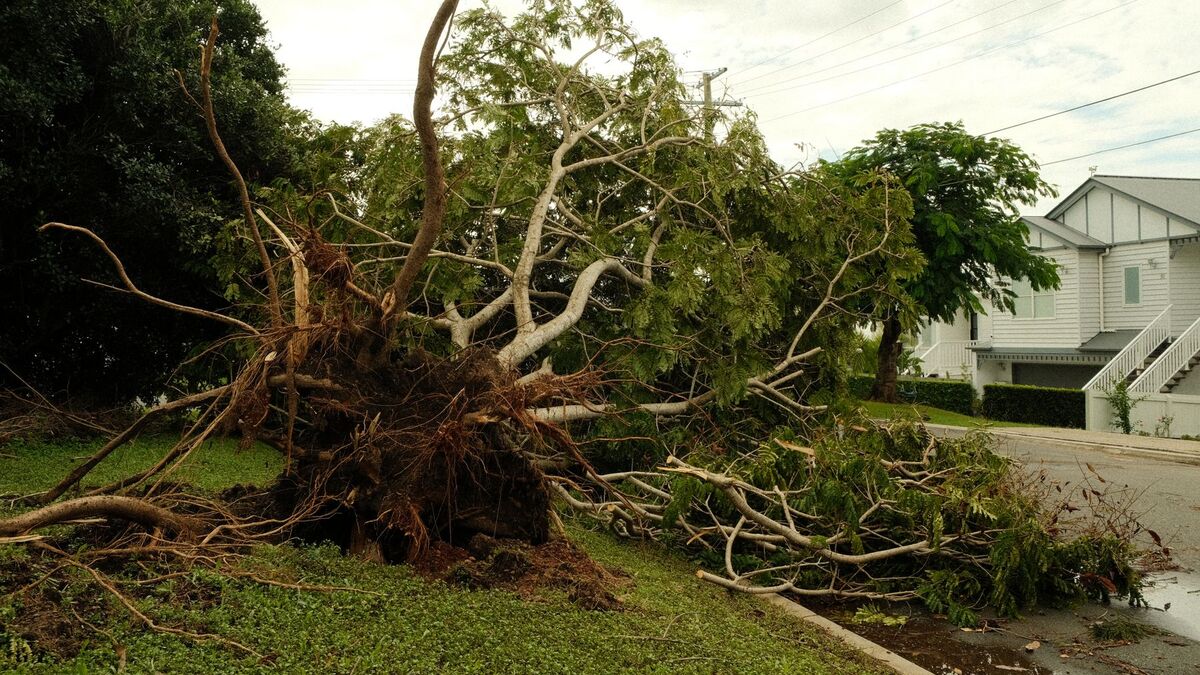
The first few minutes after a tree hits the house
The instinct is to go look. Resist it until you know what came down and what it is touching. Work through these in order:
- Get everyone out of the rooms under the impact, and out of the house entirely if a ceiling is sagging, walls have cracked or you hear creaking.
- If anyone is hurt, if you smell gas, or if a fire has started, leave and call 911.
- Look for wires before you step outside. Treat every downed or sagging line as live, stay well back, and report it to Duke Energy or the utility that serves you.
- Keep children and pets indoors or well away from the tree, and do not let anyone climb on it, walk under it or touch anything it rests on.
- From a safe spot, take wide photos and close-ups of the tree, the damage and the surroundings before anything is moved.
When power lines are tangled in the fallen tree
A tree lying across energized lines is the utility's problem first. Only utility-qualified line-clearance crews are allowed to work near live conductors, and Duke Energy clears trees from its own lines as part of restoring power. A regular tree crew will not cut, pull or climb a tree that is touching an energized line, and nobody should promise otherwise.
Electricity can travel through wet wood, through the ground around a downed line and through a chain-link fence. Stay far away and keep others back. Once the utility has de-energized or cleared the line, a tree contractor can deal with the rest of the tree.
How a crew makes a storm-damaged site safe
The first thing an experienced tree crew does on a storm call is walk around and read the scene before starting a saw. The questions are about forces: what is holding the tree up, where the weight is resting, which limbs are bent under tension and which parts could shift when something is cut.
Bent limbs and trunks pinned under other wood store energy like a drawn bow and can whip violently when released. A partially uprooted tree may be balanced on its own root plate, and cutting the trunk can let that plate drop back into the hole and roll the stump. Every one of those changes the cutting sequence.
Hanging limbs, split trunks and leaners that have not fallen yet
Some of the most dangerous storm damage is still up in the air. Broken limbs caught in the canopy, often called hangers, can drop without warning in the next breeze. Bradford pears split down the middle at their tight forks and leave half a tree dangling. Pine tops snap in high wind and lodge in neighboring trees. A tree that was standing straight yesterday and now leans with the soil heaved up on one side has lost root anchorage.
Do not try to pull a hanger down with a rope or a truck; the limb can swing or bounce in directions nobody expects. A damaged tree that is still standing may need to come down once the urgent work is done, and how that call gets made is covered on the tree removal page.
Lifting a tree off a roof without making the damage worse
Cutting a tree at the base while its top rests on a house is the classic mistake. The trunk can drop, slide or roll across the roof and turn a few broken rafters into a collapsed section. Instead, the weight comes off from the top down, in pieces, so the load on the structure gets lighter with every cut.
On smaller trees, climbers or a bucket truck work from above, tying each piece to a rope run through a rigging point in a sound tree or a secured section of the fallen one, and lowering it under control. On large trees, a crane is often the safest tool: the crane holds the weight, the climber cuts a section free, and the crane lifts it clear of the house and sets it down in the yard.
A crane needs firm ground for its outriggers, clearance from overhead lines and room to swing. After a soaking storm, Upstate clay may be too soft where the crane would ideally sit, which changes both the plan and the price.
Tarping and drying in once the weight is off
Once the tree is off, the hole it left needs covering before the next rain. Who handles that varies. Some tree contractors put a temporary tarp over the opening as part of a storm job; in other cases a roofer or a restoration company comes in to tarp, board up and dry out the interior. Ask up front who is doing what so the roof is not left open between crews.
Trees on cars, fences, sheds and blocked driveways
Each of these has its own wrinkle:
- A tree on a car: do not try to drive out from under it or pull it free. Photograph it, leave it, and let the weight be lifted so the frame and glass are not damaged further.
- A tree across the driveway: if it traps vehicles or blocks an exit someone may need, say so; clearing a path is often handled first and the rest later.
- A tree through a fence: fences along property lines may be shared, so let the neighbor know before anything is cut or removed.
- A tree on a shed, carport or detached garage: these light structures can collapse further when the load shifts, so treat them like a roof strike.
Why Upstate storms bring so many trees down
Summer thunderstorms here can produce sudden straight-line winds, often arriving after days of rain that leave red clay saturated and roots with little grip.
Ice storms are less frequent but do their damage differently. A coating of ice multiplies the weight of every branch, and loblolly pines and Bradford pears are notorious for snapping or splitting under it. Tropical remnants that push inland from the coast bring long hours of wind and soaking rain together, which is the worst combination for shallow-rooted trees. Drought years and pine beetle attacks leave dead and weakened pines standing that break easily in the next blow. Regular, careful pruning helps some trees ride out the weather, and that work is explained on the tree trimming page.
Photos and records to keep for a homeowner claim
How a claim works and what is paid is between you and your carrier, and nothing here is advice on that. What helps in almost every case is a clear record made before the scene changes. Useful items to collect:
- Wide shots of the whole tree and house from several angles, plus the base of the tree and the root plate or break point.
- Close-ups of each point of contact: roof, gutters, siding, windows, fence, vehicle.
- Interior photos of any ceiling damage, leaks or debris, with the date and time noted.
- The tree contractor's written scope and invoice, itemized so that removing the tree from the structure is listed separately from cleanup of the yard.
Why storm work is priced and scheduled differently
Emergency tree work is priced by the contractor after seeing the site, and it rarely matches the cost of the same tree taken down on a calm day. Cost drivers include whether the tree is on a structure or on open ground, whether a crane or bucket truck is needed, how much rigging the job takes, how badly the wood is twisted and loaded, access for equipment on soft ground, after-hours work and how much cleanup is included.
Timing is equally hard to pin down. After a widespread storm, every tree crew in the region is busy at once, and trees on occupied homes and blocked exits typically get attention before trees lying in the yard. Nobody can honestly promise an arrival time across a whole storm event.
Cleanup after the emergency part is over
Storm jobs often happen in two stages. The first visit gets the weight off the house, clears the driveway and makes the site safe. The second, sometimes days later, deals with the rest: cutting up the trunk on the ground, chipping brush, hauling or stacking logs and raking up the debris.
The stump is usually left at ground level after a storm removal, and taking it below grade is covered on the stump grinding page. Storm calls come from every corner of the county, including Roebuck and Boiling Springs, and the full list of communities is on the areas page.
Emergency tree service in Spartanburg SC for trees on roofs — common questions
Should I cut up a fallen tree myself after a storm?
Storm-downed trees are among the most dangerous wood anyone can cut, because trunks and limbs are bent, pinned and loaded in ways that are hard to read. Chainsaw injuries spike after every major storm for exactly that reason. The safe things to do yourself are limited: keep people away, photograph the damage, rake up small twigs on open ground, and move light debris that is not under tension or near a line. Anything involving a saw on a loaded trunk, a roof or a hanging limb belongs to a trained crew.
Is it safe to stay in the house with a tree on the roof?
That depends on how much of the tree is on the house and what it broke. If the ceiling is cracked or sagging, if water is pouring in, if framing is visibly broken, or if you smell gas, get out and stay out until someone has looked at it. If a few limbs rest lightly on the shingles with no interior damage, people often stay but keep out of the rooms underneath. When in doubt, leave. A building official or contractor can assess the structure once the tree weight is off.
Will a tree service remove a tree that is lying on a power line?
Not while the line is energized. Working near live lines is restricted to utility-qualified crews, and Duke Energy handles trees on its own distribution lines when restoring service. Report the downed line to the utility and stay far back. Once the line is de-energized or cleared, a tree contractor can take care of the rest of the tree. If the tree is on the wire running from the pole to your house, the utility still needs to be told, since that service drop is theirs.
A tree is leaning badly after the storm but has not fallen. What should I do?
Treat it as if it could fall at any moment. Look at the base: soil heaved up or cracked on the side away from the lean, or roots snapped and exposed, means the anchorage has failed. Keep everyone out of the area it could reach, which is at least the full height of the tree in the direction of the lean, and move cars. Take photos showing the lean and the base. Then send those photos with the address so a contractor can judge whether it needs to come down urgently.
How can I tell a legitimate storm crew from a scam?
Be cautious with anyone who shows up unasked right after a storm and pushes for a decision on the spot. Ask for a written scope that names the trees, the work and what cleanup is included. Look for a local address and a business you can find independently. Be wary of large deposits before work begins and of anyone who offers to handle your claim paperwork for you. A real contractor will look at the job, explain how they will rig it and put the price in writing.
Do tree crews work at night on emergency calls?
Sometimes, but usually only for the narrow part of the job that cannot wait. Cutting in the dark on storm-loaded wood is hazardous, so most contractors limit night work to stabilizing the situation, such as getting weight off an occupied home or opening a blocked exit, and leave the full removal for daylight. Whether anyone can come out at night depends on how many calls are coming in and how dangerous the site is. Send photos and describe what is at risk so the urgency is clear.
Will the crew take the whole tree away or just get it off the house?
Either can happen, and it should be spelled out in writing. On a busy storm day, the first visit often focuses on lifting the tree off the structure and setting the wood on the ground, with log hauling and brush chipping scheduled later or quoted separately. Some homeowners prefer to keep the logs for firewood. Ask whether the price includes hauling, chipping, raking and leaving the stump at ground level, so there is no confusion about what the yard will look like when the crew leaves.
Talk through your site
Start with the address, what you want done, and a few photographs of the area, including anywhere water sits after a heavy rain.
Related work
Tree Removal
Dead, leaning, storm-damaged and unwanted trees taken down safely, including tight spots near houses and lines.
Tree Trimming
Pruning for clearance, structure and storm resistance, done to good arboricultural practice instead of topping.
Stump Grinding
Grinding stumps and surface roots below grade, cleanup of the grindings and what to plant afterward.
Land Clearing
Lot and acreage clearing for building pads, driveways, pasture and overgrown property.
Across the metro
Boiling Springs
Fast-growing north-side subdivisions with young pines, hardwood lots and new construction clearing.
Inman
Rolling country and orchard land toward the foothills with big hardwoods and long property lines.
Duncan
West-side growth along I-85 with new neighborhoods, field-edge trees and lot clearing.
Roebuck
South-side rural and suburban lots with mature oaks, pines and storm-prone tree lines.