Home › Services
Stump grinding in Spartanburg SC, down below the grass line
A stump left behind after a removal is more than an eyesore. It catches mower blades, throws up suckers, softens over several summers and gives wood-eating insects somewhere to settle. Grinding is how most Spartanburg-area homeowners deal with it: a machine with a spinning toothed wheel chews the wood into chips until what remains sits under the soil, and the hole gets backfilled. This page covers how that works in Upstate red clay, how deep the grind should go for what you plan next, what to do about roots snaking across the lawn, and what a contractor needs to know before the machine is unloaded. Once you want it gone, share where the stump is and snap a picture or two so the work can be sized up.
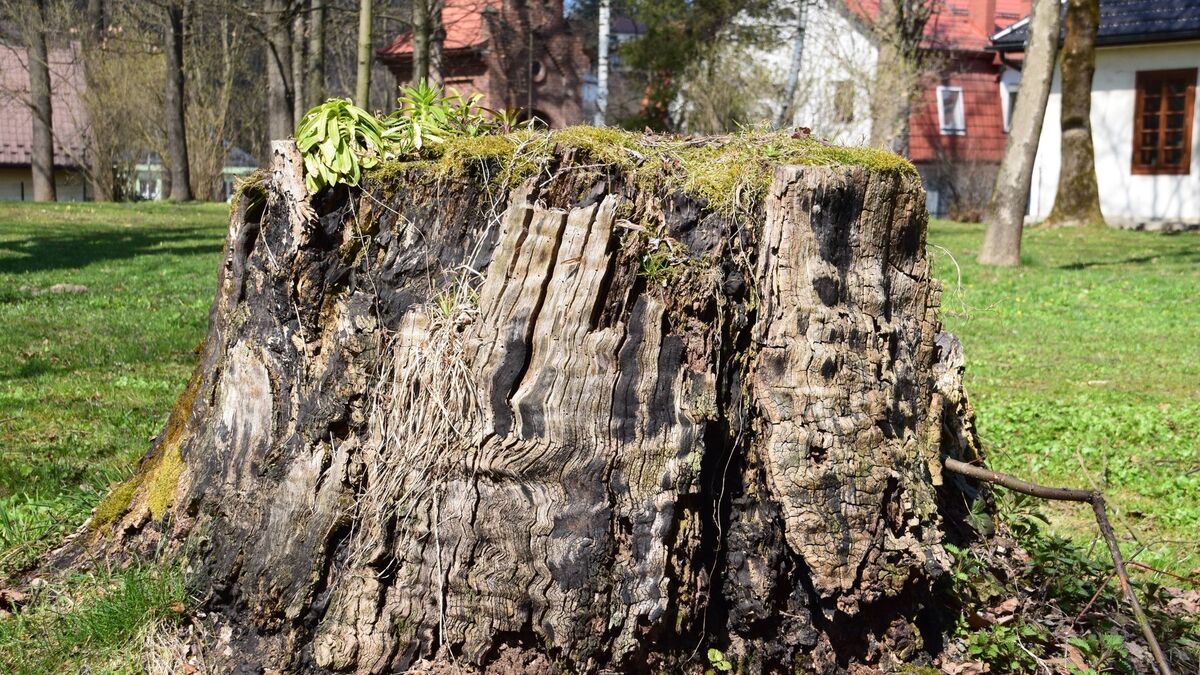
How a stump grinder actually chews through a stump
The working end of every grinder is a heavy steel wheel ringed with carbide-tipped teeth. The operator lowers the spinning wheel onto the edge of the stump and sweeps it side to side, shaving off a few inches of wood with each pass, then steps the machine forward or drops the wheel a little deeper and sweeps again.
Species matters more than most people expect. Oak and hickory are dense and slow to cut. Loblolly pine is softer but full of resin that gums up the teeth. Sweetgum is stringy and tends to tear rather than shave. The width that counts is measured right at the ground, across the root flare, not up the trunk where it narrows.
How deep the grind should go for what you plan next
A grind that is plenty for new grass would be too shallow for a patio footing. Tell the contractor what the spot will become, and the depth can be set to match. These are the common situations:
- Lawn or sod going back over the spot: a modest grind of several inches below the surrounding soil usually leaves enough room for topsoil and turf roots.
- Mulched bed or shrub planting: a somewhat deeper grind gives new plants room to root into soil rather than a layer of buried wood.
- A new tree going in at or near the same spot: ask for the deepest practical grind and plan to shift the new planting off center anyway.
- Patio, shed pad, walkway or fence posts: say so up front, because footings and post holes need solid soil, and the contractor may suggest pulling the stump instead.
Surface roots that run across the lawn
Water oaks, maples, sweetgums and older pines often leave thick roots running along the top of the soil, sometimes several feet out from the trunk. Grinding the stump alone leaves those ridges behind to trip people and scalp the mower deck. Root grinding follows each one outward, cutting a shallow trench along its length until the wood sits below the surface.
One caution: if a living tree you are keeping shares that ground, grinding through its roots can injure it badly. Point out any tree you want to protect, and the operator can stop short of its root zone.
Getting the machine to the stump: gates, slopes and soft clay
Access is the first thing a contractor asks about, and the most common surprise on the day. Many compact grinders are built to pass through a typical backyard gate, but older chain-link and wooden gates vary, and a post or a raised bed can pinch the path. Measure the narrowest point between the driveway and the stump and include it in your message.
Spartanburg County is rolling country, and plenty of backyards drop away from the house. After a run of rain, Piedmont red clay turns slick and soft, and a heavy machine can leave ruts that take a season to disappear. Crews often lay down plywood or ground mats to spread the load, or reschedule until the yard dries out.
Useful things to mention before the visit:
- The narrowest gate or gap on the route, and whether a fence panel can be removed.
- Irrigation heads and lines, landscape lighting wire, and any buried dog fence near the stump.
- Slopes, retaining walls and steps between the street and the work area.
- Any stump that sits against a foundation, driveway slab, wall or fence line.
Rocks, wire and other surprises buried in old stumps
Upstate soil is full of quartz and broken granite, and a tree that grew around a rock will hold it in its root flare for decades. Old trees also swallow whatever people attached to them: fence wire, nails from a long-gone tree house, clothesline hooks, sign brackets and chain. All of it is hard on carbide teeth, and a strike can fling fragments a long way.
Operators run with guards in place and watch for the change in sound and feel that means metal or stone. On your side, the safe move is simple: keep children, pets and spectators well back from the machine while it runs, close nearby windows, and move vehicles out of the throw zone.
SC811 locates come before the wheel touches the ground
Grinding is digging, and in South Carolina digging starts with SC811, the free call-before-you-dig service. A request through SC811 sends the member utilities out to mark their buried lines with paint and flags, so the operator knows where gas, power, water and communication lines run near the stump. Trees were often planted right beside a service line, so this is not a formality.
The marks only cover utility-owned lines. Private lines you installed yourself, such as power run to a detached garage, a gas line to a grill or pool heater, irrigation and low-voltage lighting, are not marked by the utilities. Point those out by hand or with a sketch.
What happens to the grindings once the stump is gone
The pile of chips and soil is usually far bigger than the stump looked. A good quote names which of these options is included:
- Leave the grindings in and around the hole. This is the most basic option and the least expensive, but the mound will sink as the wood breaks down, and grass struggles to grow in pure wood chips.
- Pull most of the grindings out of the hole and leave them in a pile for you to use as mulch on beds or paths, kept back from the trunks of living shrubs.
- Haul the grindings away entirely and leave the hole ready for topsoil. This is the cleanest result and typically priced as an add-on.
Backfilling, settling and getting grass to grow on the spot
Fresh wood chips buried in soil pull nitrogen while they decompose, which is why grass seeded straight into grindings often comes up yellow and thin. For a good lawn patch, get most of the chips out of the hole first. Then fill with screened topsoil, firm it lightly, and leave a slight crown so the spot ends up level after it settles.
Match the turf to what you already have. Bermuda and zoysia are common in sunny Spartanburg lawns and establish best from late spring into summer, from sod, plugs or seed. Tall fescue suits shadier yards and is usually seeded in early fall. Expect to top-dress the spot once more as buried roots decay and the surface drops.
Planting a new tree near where the old one stood
Putting a new tree in the exact hole rarely works well. The soil is full of decaying roots and chips, it settles unevenly, and if the old tree died from a root disease, that problem can linger in the ground. Shifting the new tree several feet away, into undisturbed soil, gives it a much better start.
Pick a species suited to the space and light rather than repeating one that failed. Once a young tree is in the ground, early structural pruning sets it up for decades, and that is covered on the tree trimming page.
Grinding a stump versus pulling it out root ball and all
Grinding removes the visible stump and the top of the root system and leaves the deeper roots to decay in place.
Full stump removal means an excavator or similar machine digs around the stump and pries out the root ball. It leaves a big crater, tears up the surrounding ground and needs heavy equipment access, but it is the right call where a foundation, slab, building pad or drive is going in and the soil must be solid. On lots and acreage, pulling stumps and roots is part of grubbing, which is covered on the land clearing page.
Stumps that sprout, attract termites or turn to mush
Some species fight back. Sweetgum, Bradford pear, tree-of-heaven, mimosa and privet throw up sprouts from the stump and the roots after the top is cut. Pines do not resprout from a cut stump. Grinding below the root crown usually stops most stump sprouting, though a few root suckers may still pop up in the lawn for a season; regular mowing generally wears them out.
A stump left to rot draws decay fungi, and you may see mushrooms or shelf-like growths around it. Rotting wood also appeals to subterranean termites and carpenter ants, both common in South Carolina. A decaying stump in the yard does not mean the house has a problem, but a stump close to the foundation is one more source of moist wood near the structure, and plenty of homeowners grind it for that reason alone.
What drives the cost of a stump grinding job
Stump grinding is priced by the contractor after seeing the stumps, or from clear photos with something in the frame for scale. The same factors apply whether the yard is in town or out toward the surrounding communities, and the quote depends on a handful of them:
- Diameter measured at ground level across the root flare, which is the biggest single factor.
- Species and condition: green oak grinds slower than a pine stump that has been softening for a few years.
- How many stumps there are and how far apart they sit on the property.
- Access through gates, down slopes and across soft ground.
- Rock, wire, concrete or other debris in the wood.
- Requested depth and the cleanup option: grindings left, removed from the hole, or hauled away.
Stump grinding in Spartanburg SC — common questions
How soon after a tree is cut down can the stump be ground?
Right away. There is no need to let a stump dry or season first, and many removal jobs schedule the grinder for the same visit or shortly after. A freshly cut hardwood stump is tougher to grind than one that has softened for a few years, but waiting mostly means living with the stump, the sprouts and the mower damage. If the tree is still standing, the decision about taking it down belongs on the tree removal page; the grinding can be folded into the same quote.
Will a stump grinder tear up my yard?
Some disturbance is unavoidable, but it is usually limited to the area right around the stump and the path the machine takes to get there. Grindings get thrown a few feet out, and turf near the hole gets covered. The bigger risk to a lawn is a heavy machine crossing wet clay, which can leave ruts. Picking a dry day, using a compact or tracked unit, and laying plywood over soft spots keeps the damage small. Mark sprinkler heads and shallow lines beforehand so they are not crushed or cut.
Can I just let a stump rot away on its own?
You can, but it is slow. A large oak or hickory stump in the Upstate can take many years to break down, and through that time it may sprout, host fungi, attract insects and get in the way of mowing. Chemical stump products sold at hardware stores only speed the process somewhat and still leave the stump in place for a long stretch. If the stump sits in a wooded corner where none of that matters, leaving it is a reasonable choice.
Can a stump be ground right up against a house, wall or driveway?
Usually, yes, with care. The operator can work the wheel close to a foundation or slab, but cannot grind into concrete or masonry, so a sliver of stump may remain right against the structure. Roots that run under a slab cannot be chased without damaging it, and they are generally left to decay. Mention the distances in your photos, and if a stump has lifted a walkway or cracked a driveway edge, say so, because repairing that surface is a separate job from the grinding.
Is it safe to burn a stump out instead of grinding it?
Burning a stump is slow, smoky and harder to control than people expect, because the fire can smolder down into the roots and stay hidden for days. Open burning in South Carolina is subject to state forestry rules and, inside many towns, local restrictions, so check with the fire department or the city before even considering it. Near a house, fence, shed or woods line, it is a poor idea. Grinding gets the stump below grade in an hour or two without any of those risks.
Do I need to be home while the stump is being ground?
Not necessarily. Many stump jobs are done with nobody home, as long as the crew can reach the stump, the locate marks are in place and the details were settled ahead of time. It helps to agree in writing which stumps are included, how deep to go, how far to chase surface roots and what happens to the grindings. Leave gates unlocked, pets inside and vehicles moved.
Talk through your site
Start with the address, what you want done, and a few photographs of the area, including anywhere water sits after a heavy rain.
Related work
Tree Removal
Dead, leaning, storm-damaged and unwanted trees taken down safely, including tight spots near houses and lines.
Tree Trimming
Pruning for clearance, structure and storm resistance, done to good arboricultural practice instead of topping.
Emergency Tree Service
Trees on houses, cars and driveways after storms and ice, made safe first and cleared after.
Land Clearing
Lot and acreage clearing for building pads, driveways, pasture and overgrown property.
Across the metro
Boiling Springs
Fast-growing north-side subdivisions with young pines, hardwood lots and new construction clearing.
Inman
Rolling country and orchard land toward the foothills with big hardwoods and long property lines.
Duncan
West-side growth along I-85 with new neighborhoods, field-edge trees and lot clearing.
Roebuck
South-side rural and suburban lots with mature oaks, pines and storm-prone tree lines.