Home › Services
Tree trimming in Spartanburg SC that shapes, clears and strengthens without topping
A well-pruned tree looks like nobody touched it. The canopy is lighter, the dead wood is gone, the roof has room to breathe, and every cut sits where it can close over. A badly pruned tree looks butchered for years and often ends up as a removal. Around Spartanburg, the usual jobs involve oaks spreading over roofs, pines dropping limbs on driveways, young shade trees with weak forks, and crepe myrtles cut to knuckles every winter. This page explains the kinds of pruning, where a proper cut goes, how much foliage a tree can spare, and when each species should be trimmed. To have a tree looked at, send photos through the contact page.
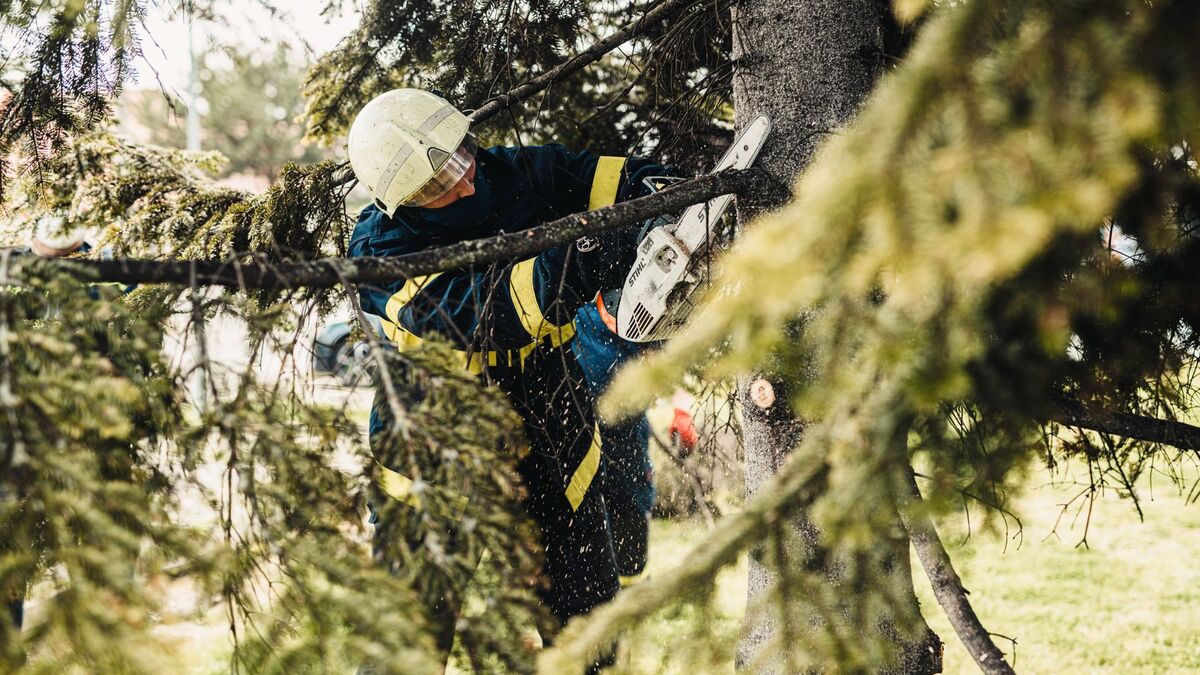
What careful pruning accomplishes for a tree and the property around it
Trees shed branches on their own schedule, which usually means during a storm. Pruning gets ahead of that by taking out the wood most likely to fail and shaping the canopy so wind, ice and weight spread more evenly. It also lets light reach the lawn, keeps limbs off shingles and gutters, and opens sight lines along a driveway.
What pruning cannot do is shrink a tree permanently or reverse serious decay. A tree that has outgrown its spot or gone hollow needs a different conversation, covered on the tree removal page. Trimming is for trees with a future.
The main types of pruning work and what each one is for
Asking for a tree to be "trimmed" means different things to different crews. Naming the category you want on the quote prevents surprises:
- Crown cleaning: removing dead, dying, broken and poorly attached branches without changing the overall shape. The most common and least invasive job.
- Crown thinning: selectively removing some live branches so light and wind pass through and long limbs carry less weight, spread evenly through the crown.
- Crown raising: removing lower limbs to clear a driveway, walk, roof edge or view, done gradually on young trees.
- Crown reduction: shortening height or spread by cutting a branch back to a smaller side branch that takes over as the new end. This is the correct alternative to topping.
- Structural pruning: shaping young trees toward one strong central stem and well-spaced limbs.
- Clearance pruning: cutting back branches that rub the roof, crowd the chimney or press against siding.
Where the cut belongs: the branch collar and avoiding stubs
Every branch joins the trunk at a slightly swollen ring of tissue called the branch collar, often with a raised ridge of bark above it. A proper cut sits just outside both, leaving the collar intact, because that is where the tree builds the wound wood that rolls over the cut. A flush cut removes that defensive tissue. A long stub dies back and carries decay into the trunk.
Heavy limbs come off in stages so their weight does not peel a strip of bark down the trunk, and crews lower them on rope over roofs and gardens. Wound paint is rarely recommended now, since it tends to trap moisture. A clean cut in the right place is the treatment.
Why topping damages trees and what to request instead
Topping cuts large branches or the main stem back to stubs with no regard for side branches. It is still sold because it looks like it makes a tree smaller and safer. The big wounds cannot close, so decay moves in, and the tree pushes out dense clusters of fast, weakly attached shoots below each cut. Within a few seasons it is as tall as before, bushier, and far more likely to drop branches.
Topping also strips away much of the foliage that feeds the roots, leaving the tree open to insects and drought stress. Recognized arboricultural practice treats it as a defect. If a tree is too big for its spot, ask for a reduction with proper cuts to side branches, or discuss replacing it.
Crepe myrtles and the local habit of cutting them back to knuckles
Every late winter, crepe myrtles across Spartanburg County get chopped back to the same thick stubs, a habit so common it passes for maintenance. Over time it builds swollen knobs at each cut, produces long whippy shoots that flop under their blooms, and hides the smooth mottled bark that is one of the plant's best features.
Proper care is lighter: remove suckers at the base, take out crossing and inward-growing branches, and cut back to a side branch rather than an arbitrary height. A crepe myrtle that must be cut hard every year to fit is the wrong variety for the space. Years of knuckle cuts can often be undone by keeping a few strong shoots at each knob and removing the rest over a couple of seasons.
How much live canopy a tree can afford to lose in one pruning
Leaves are the tree's food supply, so every live branch removed has a cost. Dead wood can come out freely, but live wood should go in modest amounts. A widely used rule of thumb lets a healthy young tree lose up to about a quarter of its live foliage in a season, with mature trees losing noticeably less, and stressed trees pruned lightly if at all.
That is why big goals, like raising a young oak over a driveway, are often spread over several visits. If a quote calls for removing a large share of a big tree's live crown at once, ask why. Over-thinning, known as lion-tailing, leaves foliage only at the tips of long bare limbs, which then snap more readily in wind.
Timing your pruning by species across the Upstate seasons
Dead and broken wood can come out any time. Larger structural work goes better when matched to the species:
- Oaks: late fall through winter, when insects drawn to fresh wounds are least active.
- Pines: winter is favored, since fresh cuts release resin that can attract bark beetles in warm months.
- Dogwoods, redbuds and cherries: soon after they finish blooming, so next year's flower buds stay.
- Maples and birches: they bleed sap if cut in late winter, which looks alarming but rarely harms them.
- Crepe myrtles: late winter, before new growth, using the light approach above.
- Sweetgums, tulip poplars and most shade trees: the dormant season, when bare branches are easy to read.
Pruning pines and hardwoods to hold up better in storms and ice
Summer thunderstorms, occasional ice storms and hurricane remnants all test Upstate trees. Pruning cannot make a tree storm-proof, but it lowers the odds of a limb on the roof. On hardwoods the work centers on removing dead wood, shortening overextended limbs with reduction cuts, and dealing with codominant stems, where two trunks of similar size share a fork with bark pinched between them, a frequent failure point.
Tall loblolly pines carry relatively light limbs, and their bigger risk is usually whole-tree failure. Removing dead limbs helps; stripping a pine to a tuft of green at the top does not. Trees already split or down belong on the emergency tree service page.
Structural pruning on young trees saves money and trouble later
The cheapest time to fix a tree's structure is when its branches are thumb-sized. A young maple or oak in a new subdivision often grows two or three competing leaders, which become large codominant stems that split decades later. Choosing one leader early and shortening the rivals steers the tree toward a single strong trunk.
Structural work also spaces the main limbs around the trunk, removes tight narrow forks, and gradually lifts the lowest limbs as the tree grows. New construction lots deserve extra attention, since young trees there often carry bark or root damage, as on many lots in the Boiling Springs area.
Clearance from roofs, gutters, chimneys and overhead wires
Branches resting on shingles grind away granules in every wind, shade feeds moss and algae, and leaves pack gutters. Limbs near a chimney raise fire and animal access concerns. Clearance pruning cuts back to proper side branches so the canopy stays natural with a gap above the roofline, sized to the species and how often you want to repeat the work.
Only utility-qualified line clearance crews prune near energized lines, and the utility, Duke Energy for much of the area, manages trees around its own lines along the road. The service line to your house can sometimes be worked near after the utility arranges a temporary disconnect. Never cut branches touching a wire yourself.
Climbing gear, aerial lifts and why spikes stay off pruning jobs
Climbing spikes, the sharp gaffs strapped to a climber's boots, punch through bark into living tissue with every step. On a removal that does not matter. On a pruning job it opens dozens of wounds up the trunk that let in decay and insects, so a tree being kept should be climbed with ropes and a saddle from tie-in points in the canopy.
A lift is an alternative when it can reach without crossing soft lawn or steep slopes. Writing "no spikes" into a pruning quote settles the question before the crew arrives.
What drives the price of a trimming job and what the quote should say
The contractor sets the price after seeing the trees. The main cost drivers, and the details a solid quote should contain:
- The number of trees and their height, spread and condition.
- The pruning type for each tree, named specifically.
- Lift access versus climbing, and how close the trees sit to the house and wires.
- Whether debris is chipped and hauled or chips are left for mulch.
- A line confirming no topping and no spikes on trees being kept.
- Workmanship coverage terms and how the yard and beds will be protected.
Tree trimming in Spartanburg SC that shapes — common questions
How often should mature shade trees be pruned?
Most healthy mature trees need only a periodic check and light pruning every few years, with closer attention for fast growers near a roof or trees that shed dead wood often. Young trees benefit from shorter intervals while their structure is set. Rather than a strict calendar, have trees looked at after a significant storm or when dead branches appear high in the canopy.
Should I paint or seal pruning cuts on my trees?
Generally no. Tar-based dressings and spray sealers were once standard, but they do not stop decay and can hold moisture against the wood, which suits fungi. Trees defend themselves by walling off wounds internally and growing new tissue over the outside, which works best on a clean cut just outside the branch collar. An arborist can explain the few situations where exceptions apply.
Will a topped tree ever grow back to a natural shape?
Sometimes, partly, with years of corrective work. Restoration pruning keeps a few of the strongest new shoots at each topping cut as future branches and removes or shortens the rest over several visits. The tree may never lose the weak points left by the original cuts, especially if decay has started at the stubs. Some topped trees recover reasonably well, while others are better replaced.
How do I know if a branch hanging over my roof is dangerous?
Look for wood with no leaves in summer, cracks where the branch meets the trunk, missing bark and fungal growth along the limb. A branch sagging lower than it used to, or one holding a broken limb caught in it, also needs attention. Binoculars help from the ground. If you see any of these, have the branch checked before a storm settles the question.
Does trimming a tall pine make it more likely to blow over?
Removing dead branches does not weaken a pine. Trouble comes from taking too much live crown, especially stripping the lower and middle green limbs until only a tuft remains on top. That reduces the foliage the tree needs, and a stressed pine is more vulnerable to beetles. Whether a pine is likely to go over depends far more on roots, soil and lean than on modest pruning.
Why does my crepe myrtle grow weak shoots after I cut it back?
Hard cuts into thick wood force a burst of shoots from dormant buds just below each cut. Those shoots grow fast and long but are anchored only in the outer layer of the old wood, so they bend under blooms and break easily. Repeating the cut each winter keeps the cycle going. Cutting to side branches, or skipping a season, lets sturdier growth develop.
Is it better to trim trees in winter or summer in the Upstate?
For most structural pruning, the dormant months from late fall to late winter are better: bare branches are easy to read, many insects are inactive, and cuts begin closing as spring growth starts. Summer has its uses too, such as removing hazardous limbs that show once the tree leafs out and pruning spring-flowering trees right after bloom.
Talk through your site
Start with the address, what you want done, and a few photographs of the area, including anywhere water sits after a heavy rain.
Related work
Tree Removal
Dead, leaning, storm-damaged and unwanted trees taken down safely, including tight spots near houses and lines.
Stump Grinding
Grinding stumps and surface roots below grade, cleanup of the grindings and what to plant afterward.
Emergency Tree Service
Trees on houses, cars and driveways after storms and ice, made safe first and cleared after.
Land Clearing
Lot and acreage clearing for building pads, driveways, pasture and overgrown property.
Across the metro
Boiling Springs
Fast-growing north-side subdivisions with young pines, hardwood lots and new construction clearing.
Inman
Rolling country and orchard land toward the foothills with big hardwoods and long property lines.
Duncan
West-side growth along I-85 with new neighborhoods, field-edge trees and lot clearing.
Roebuck
South-side rural and suburban lots with mature oaks, pines and storm-prone tree lines.